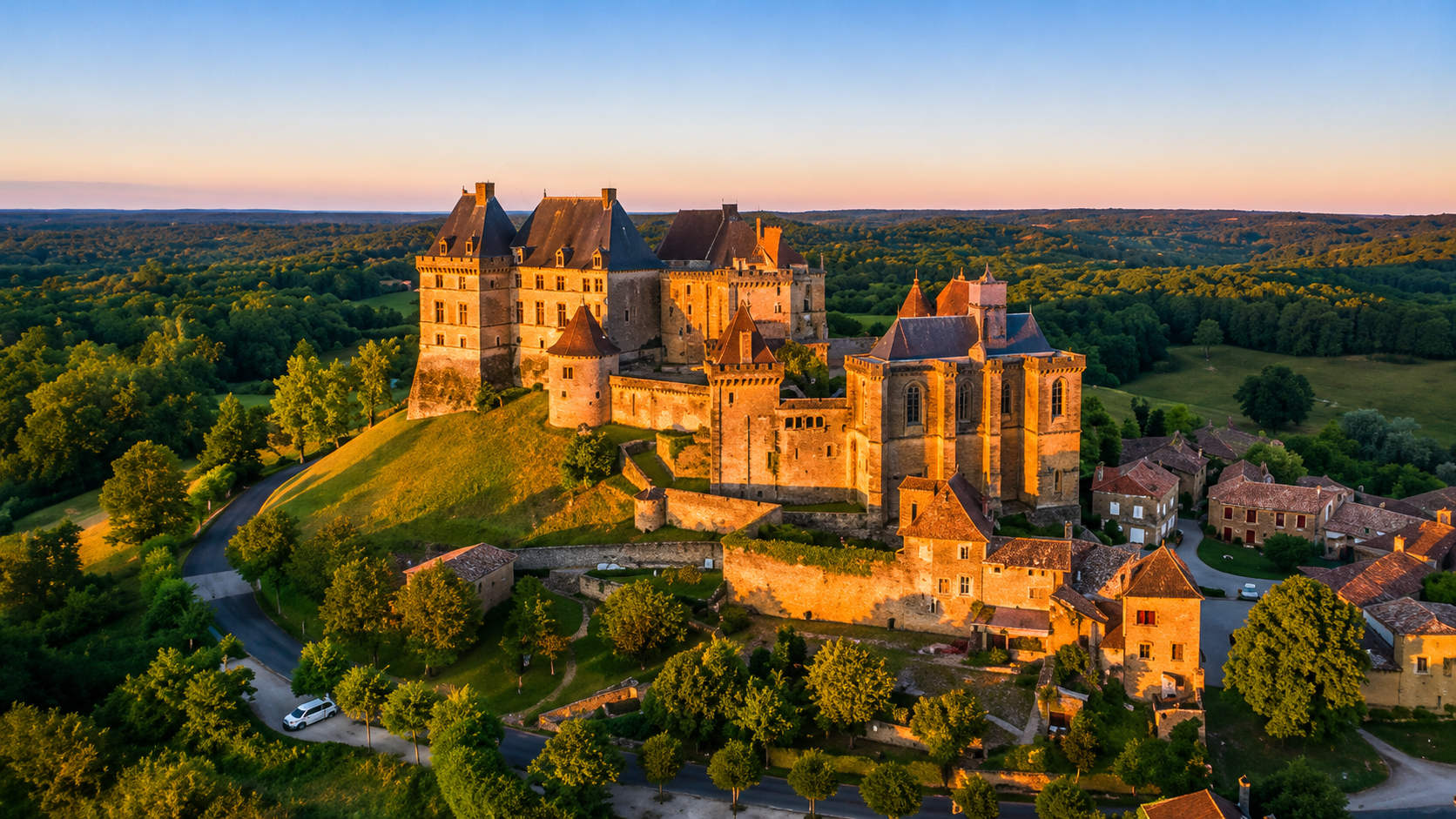
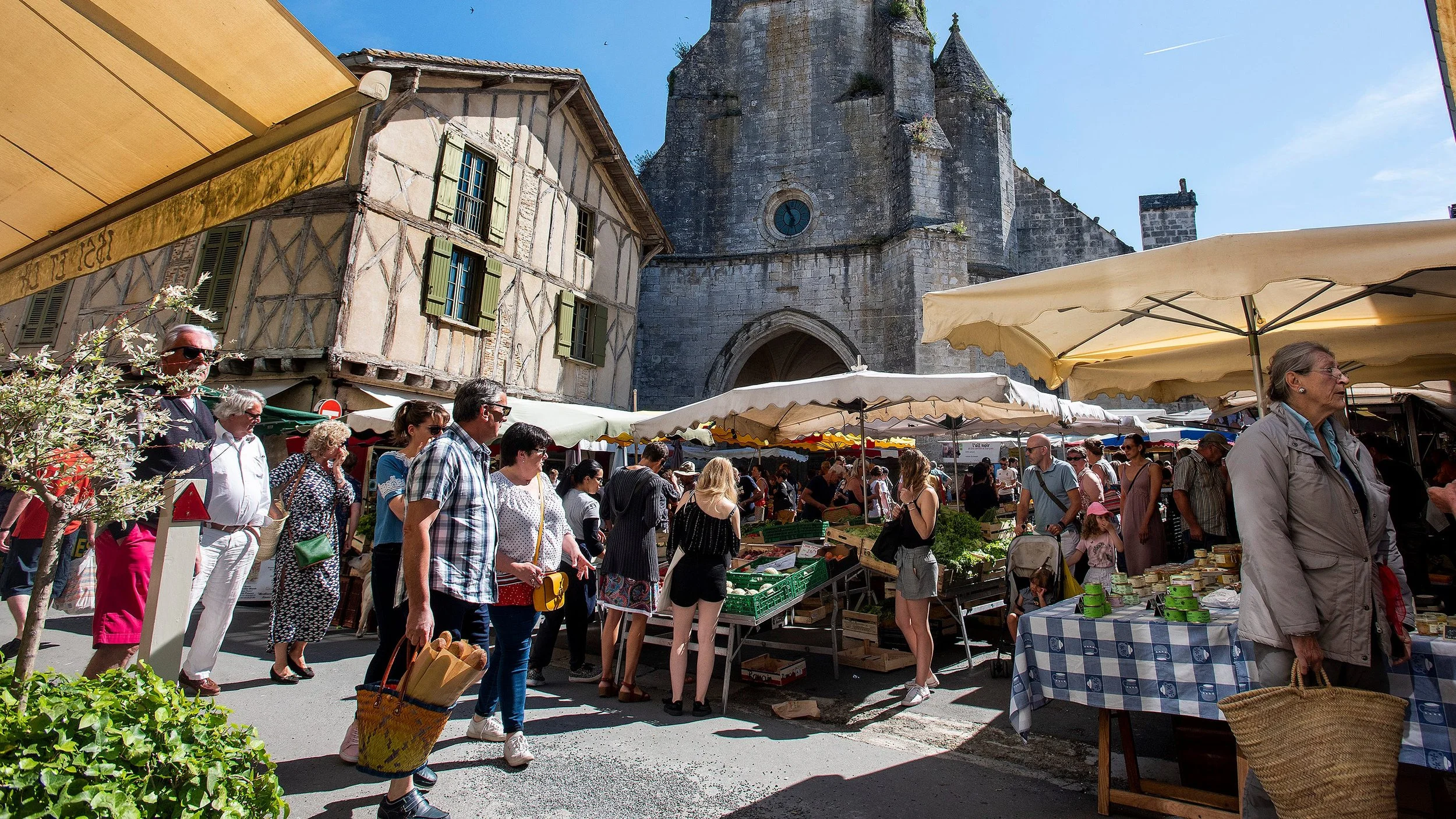
The countryside around Domaine de Montfage is filled with charming villages, quiet squares and beautiful places to slow down
From hilltop villages with wide views across the valleys to small riverside towns and peaceful rural hamlets, the area around Domaine de Montfage is full of places that are easy to explore at a relaxed pace.
The region is best discovered by car, following quiet country roads through fields, orchards and wooded hills. There is no need to plan every stop. Take a road that looks interesting, stop for a coffee in a village square, visit a local market or simply enjoy the views along the way.
Penne d’Angenais
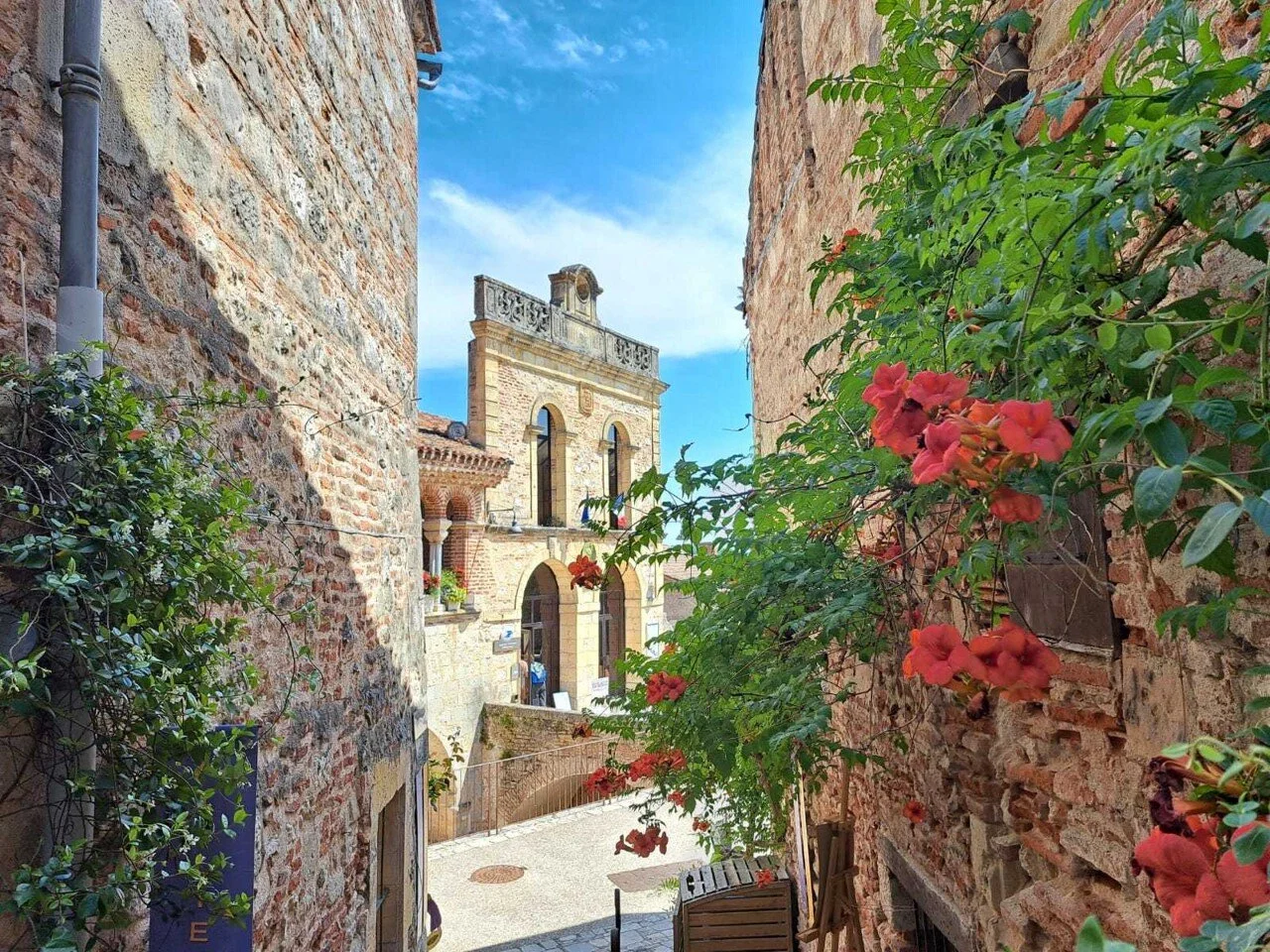
A stunning hilltop village overlooking the Lot Valley, with steep medieval streets leading up towards the sanctuary of Notre-Dame de Peyragude.
The old village is full of stone houses, small galleries and artisan workshops, with several fortified gates still marking the entrances to the medieval town. Take your time walking uphill through the narrow streets and take a sneak peak in a workshop, before continuing to the basilica, built on the site of the former Château du Roy. From here, the views stretch across the Lot Valley and the surrounding countryside, including the orchards of the Pays de Serre.
Below the village, the old Port-de-Penne sits along the Lot and offers a completely different atmosphere. It is a pleasant place to combine with a walk through the village or a slow lunch by the river.
Issigeac
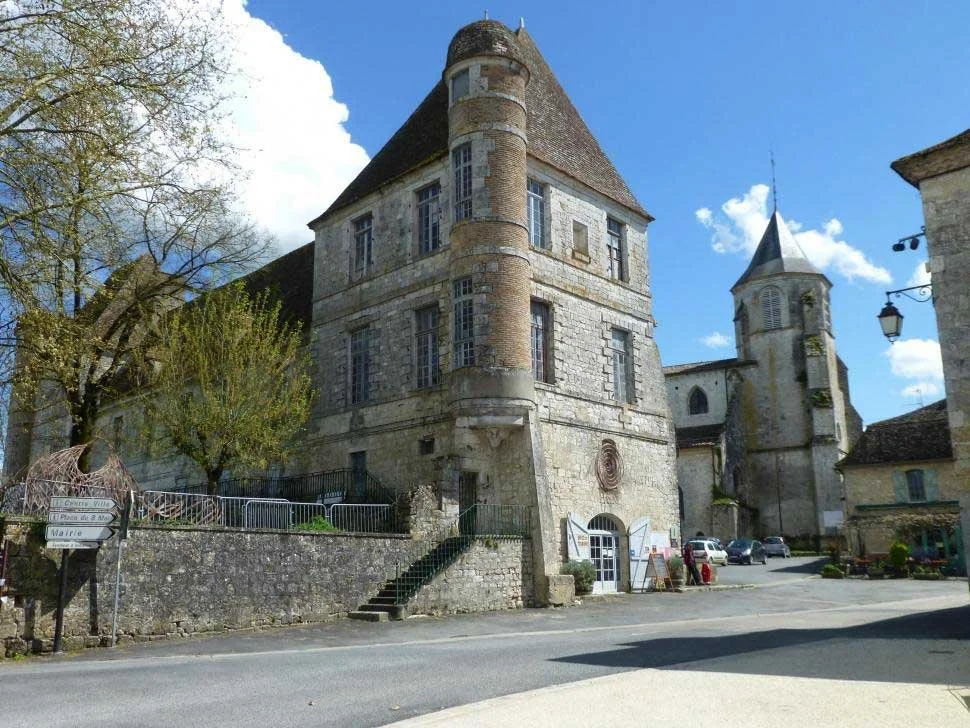
In just a 15 minutes drive from Domaine de Montfage, you find one of the most atmospheric villages in the southern Dordogne, with a winding medieval centre quite different from the more formal layout of the nearby bastides.
The village is known for its stone and half-timbered houses, small squares and narrow lanes, where cafés, restaurants and artisan shops occupy many of the historic buildings. It is particularly lively on Sunday mornings, when the weekly market fills the centre with local producers and attracts visitors from across the region. It’s also the best place to shop for french antiques, especially on the yearly antiques market in august.
The best way to experience Issigeac is simply to wander without a plan, stopping for coffee or lunch and exploring the quieter streets around the centre. During summer, the village also hosts evening food markets and various cultural events, giving it a lively atmosphere well into the evening.
Sarlat-la-Canéda
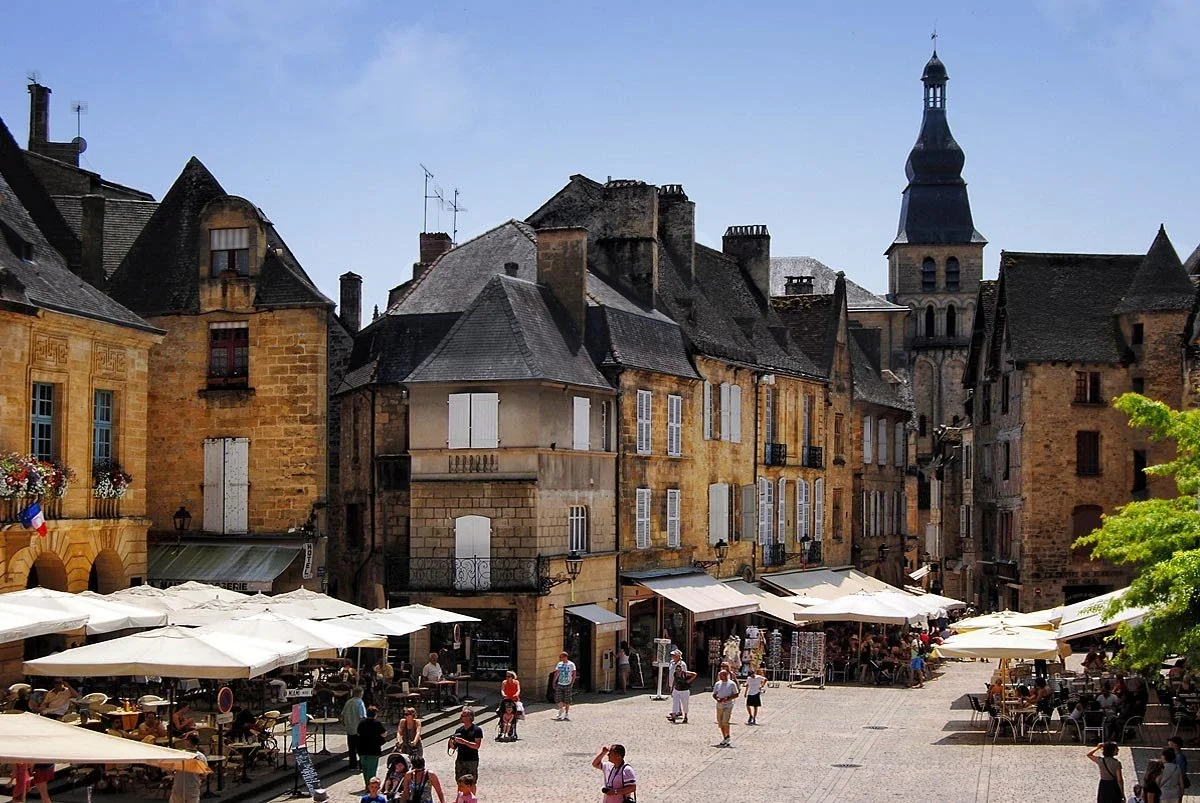
Sarlat is one of the great highlights of the Périgord Noir and deserves more than a quick stop. The historic centre is one of the best-preserved medieval ensembles in Europe, with a remarkable concentration of stone houses, Renaissance townhouses, narrow lanes and vaulted passages.
The town grew around a Benedictine abbey from the early Middle Ages. Its architecture reflects the centuries that followed: medieval streets sit alongside grand 15th- and 16th-century houses, while the cathedral and the remains of the old fortifications reveal the importance of Sarlat during the Hundred Years’ War.
The best way to explore the town is on foot. Start around the cathedral and Place de la Liberté, then wander through the Rue des Consuls and the smaller streets around the historic centre. Look out for the Maison de la Boétie, the Hôtel de Gisson and the unusual Lanterne des Morts behind the cathedral.
One of the most enjoyable parts of Sarlat is its market. The traditional market takes place every Wednesday and Saturday, with local producers selling seasonal fruit and vegetables, cheeses, walnuts, chestnuts, truffles and the many specialities associated with Périgord cuisine. On Saturdays, the market spreads further through the pedestrian streets and becomes a particularly lively way to experience the town.
Sarlat is also worth seeing later in the day. As the crowds begin to disappear, the narrow streets become quieter and the warm colour of the stone is particularly beautiful in the evening. During summer, guided night walks make use of the town's atmospheric gas lighting and offer a different perspective on the medieval centre.
Bergerac
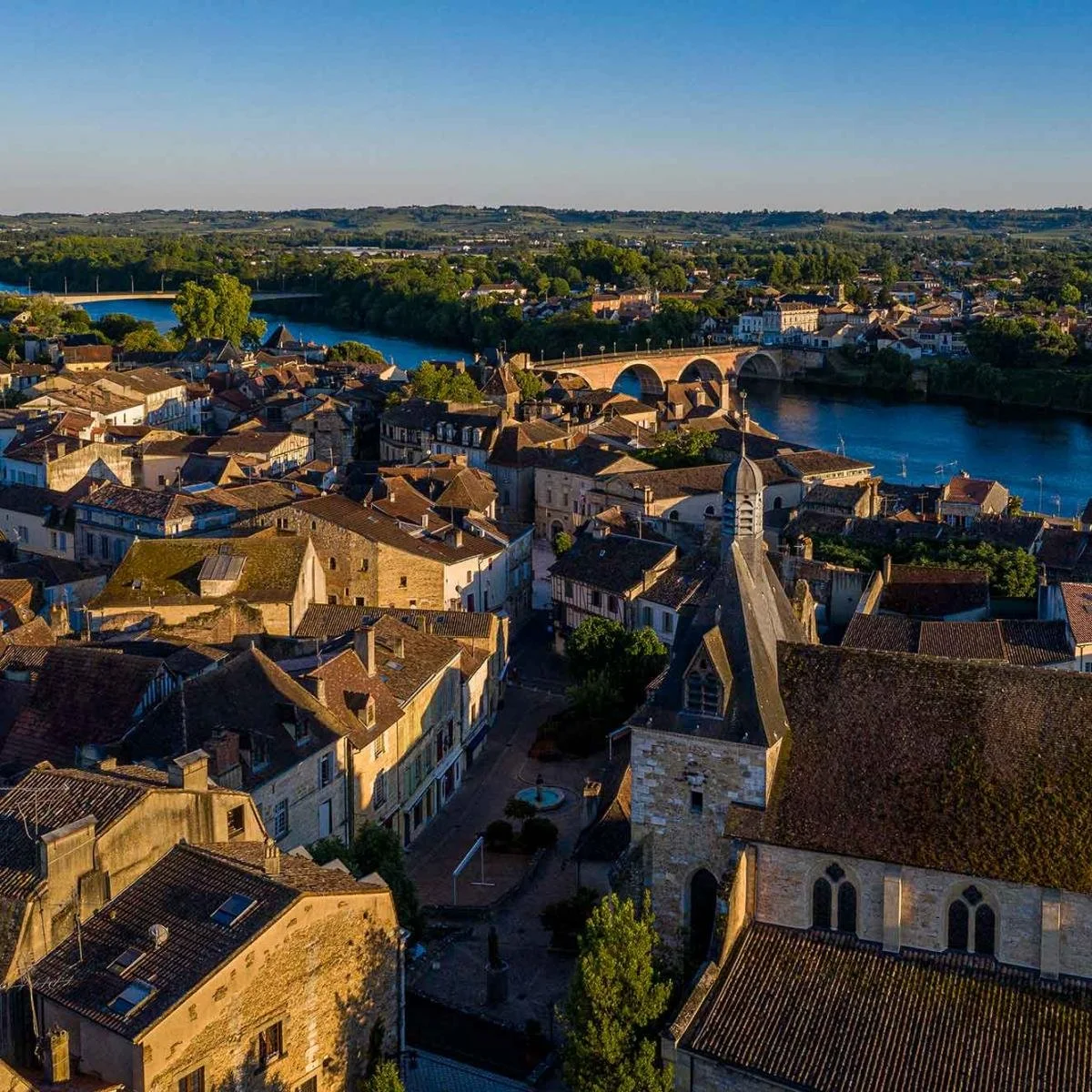
Bergerac sits on the banks of the Dordogne and has a lively, everyday atmosphere, especially in summer, without getting crowded.
The historic centre is a pleasant place to explore on foot, with narrow streets, small squares and colourful half-timbered houses mixed with Renaissance architecture. The town is closely associated with Cyrano de Bergerac, although the real Cyrano never actually visited the town—the connection comes from the famous character created by Edmond Rostand.
Bergerac is also at the heart of one of the region's oldest wine-producing areas. The vineyards stretch along both banks of the Dordogne, making the town a good starting point for exploring local wineries and tasting the different wines produced around Bergerac and Monbazillac.
A visit works particularly well as a combination of the old town, a walk along the river and a stop at one of the surrounding vineyards of Château de Monbazillac.
Beynac-et-Cazenac
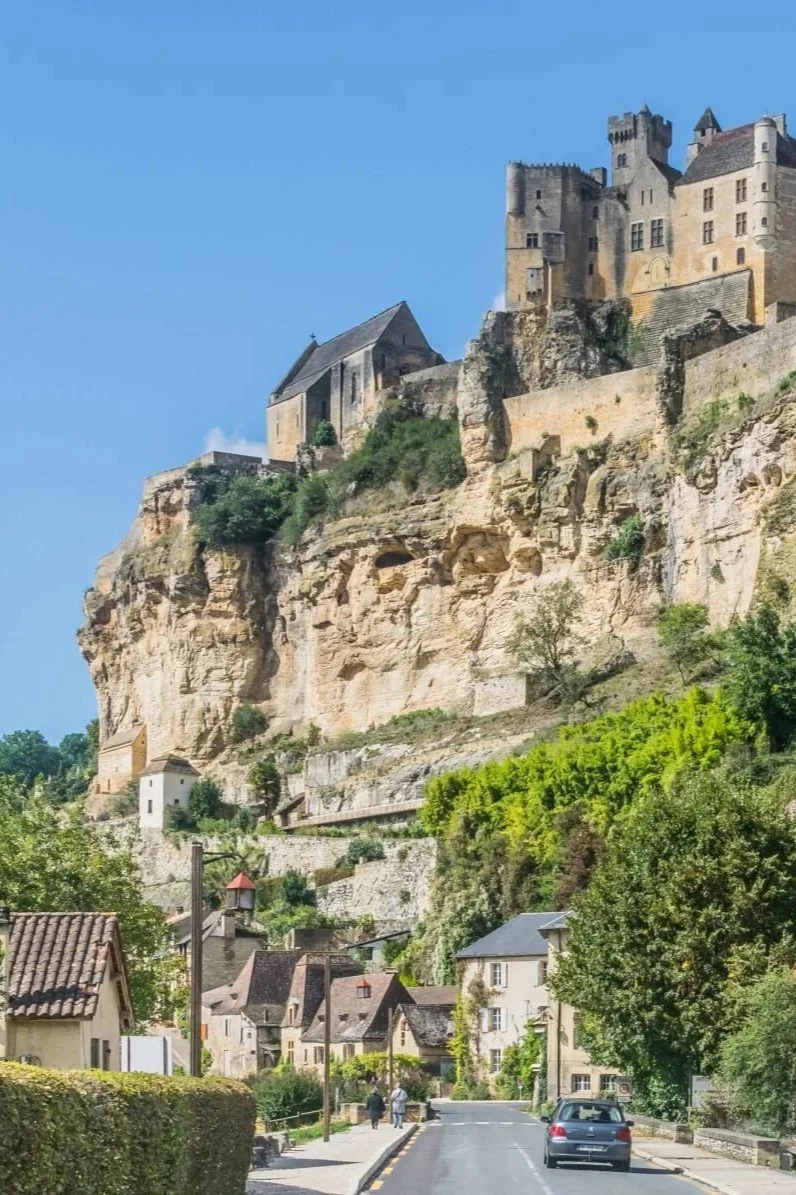
Beynac-et-Cazenac is one of the most spectacular villages along the Dordogne, built directly against the limestone cliffs above the river.
The medieval village climbs steeply from the river towards the Château de Beynac, with narrow stone streets, old doorways and small squares along the way. At the top, the château dominates the landscape and offers exceptional views over the Dordogne Valley.
The river itself is an important part of the experience. From the village, traditional gabarres cruise along the Dordogne, passing beneath the cliffs and giving a different perspective on the château and the surrounding villages.
Beynac is best enjoyed slowly: walk through the old village, climb towards the château and then return towards the river for a drink or a boat trip. The surrounding valley is also particularly beautiful by car or bicycle, and a good combination with a visit of Sarlat.
Beaumontois-en-Périgord
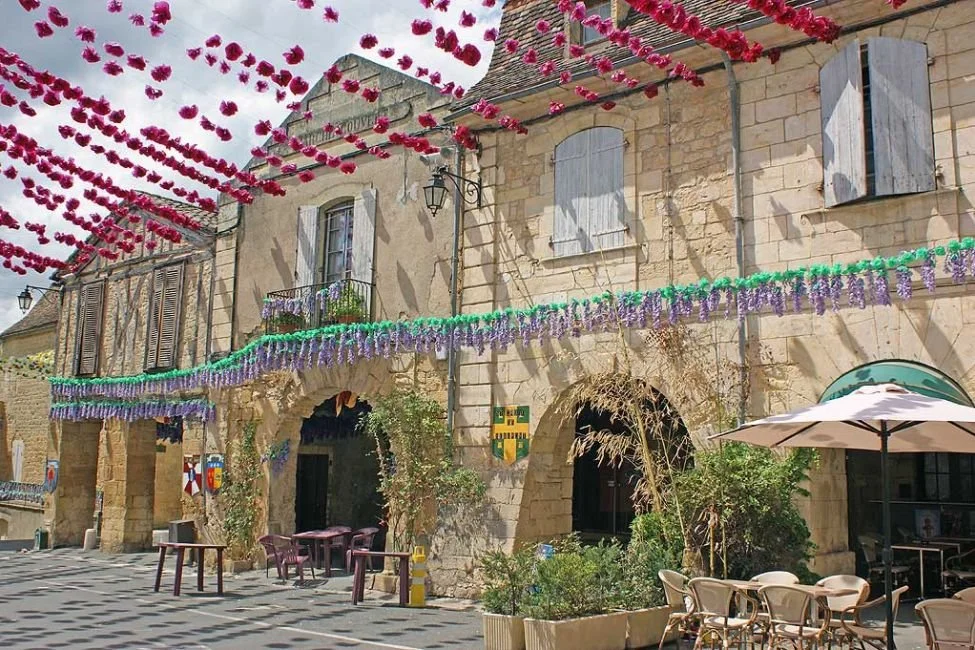
Beaumontois-en-Périgord, better known locally as Beaumont-du-Périgord, is a historic bastide founded in 1272 under the English King Edward I.
The village still retains the characteristic layout of a medieval bastide, centred around a large square with arcades and historic houses. The fortified Saint-Front church, with its defensive towers, is one of the most striking buildings in the village, while the Porte de Luzier is a surviving reminder of the original fortifications.
Beaumont is particularly pleasant on market days, when local producers and farm stalls fill the central square. The surrounding countryside is also well suited to walking, with several trails leading through the fields and wooded landscape around the bastide.
It is a quieter alternative to some of the more famous Dordogne villages and makes a good stop when exploring the countryside between the Dordogne Valley and Bergerac.
These villages each offer a different way of experiencing the region—from the hilltop views of Penne-d’Agenais and the Sunday market in Issigeac to the medieval streets of Sarlat and the dramatic river landscape around Beynac. Take your time, choose a direction and let the smaller roads between them become part of the day.